
European agriculture: "Keeping an eye on the global framework"
Food security in Europe and sustainability in agriculture were topics of discussion at Bayer's agricultural talks in cooperation with the "agrarzeitung". The following issues became clear: Europe cannot be viewed in isolation. Every change in European production has an impact on other regions of the world.
Published: 13.12.2021, 10:00
The European Union's "Green Deal" raises questions about Europe's food security. Although the plan aims to reduce the impact of agriculture on the environment, it does lead to a reduction in agricultural production in Europe. The issue: It is easy to forget that shifting production to other regions is associated with massive loss of land in some cases. That, in turn, causes harm to the climate. Nevertheless, not all food can come from the same region, nor should it have to. According to Professor Martin Qaim from the Rheinische Friedrich-Wilhelms-Universität Bonn [University of Bonn], trade and transport are decisive factors in climate change. "Production methods are still the crucial factor," he said. However, he is critical of extensification of production. The reason for his opinion is that harvests in organic farming are significantly lower than in conventional agriculture.
At the European level, says Qaim, this means fewer exports and more imports. For the rich countries of Europe, this will not be a problem at first. However, in poorer countries around the world, this can have an impact on the environment. What is not grown in Europe must be produced elsewhere. Valuable and scarce land is being lost in other regions of the world. This also harms both biodiversity and the climate. "What we save here leads to higher emissions elsewhere," he explained. "Therefore we always have to keep an eye on the global situation."
Avoiding throttling production
In the throttling of production, Qaim sees a very European way of thinking. We should always keep in mind that a cutback in European agriculture would also increase production in other parts of the world and lead to an enormous loss of land there. Qaim advocates not talking about a single solution. In his opinion, transformation in production by means of innovation and digitalization are suitable approaches to securing our food systems. "Ultimately, we need a full tool kit," continues Qaim. Hopes rest on new breeding methods that would enable more robust plants, promote diversity and advance sustainability.
Related articles
A Contribution Spanning Generations
Food security begins long before the harvest. It begins with varieties that deliver yields, resist diseases and perform reliably under changing environmental conditions.
A Hint to Politicians, Delivered by Test Tube
Switzerland's top science prize goes to a researcher who helped develop the "gene scissors", a technology that has decisively advanced agriculture. While science has long since opened up new possibilities and the EU is moving ahead on regulation, Switzerland continues to dawdle.

Full Shelves – Of course! How Secure Is Our Supply Really?
Security of supply sounds like a shared goal. However, as soon as it comes to the path to get there, conflicts arise: between market and state, ecology and production, as well as self-sufficiency and international connectivity. The Agricultural Policy Podcast and swiss-food.ch explore the key dependencies and areas of tension surrounding supply security in a five-part series. The highlight will be a live podcast in front of an audience on November 5, 2026, at the Äusserer Stand (Hofcafé) in Bern.
Is Organic More Sustainable?
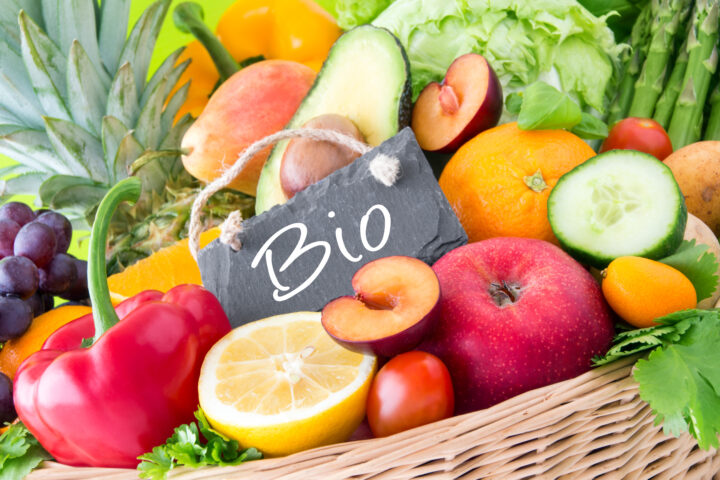
Organic food is considered a prime example of sustainability – but in reality, it often ends up in the waste bin faster than conventional products. The omission of artificial preservatives and modern plant protection drastically shortens shelf life and leads to more food waste.