

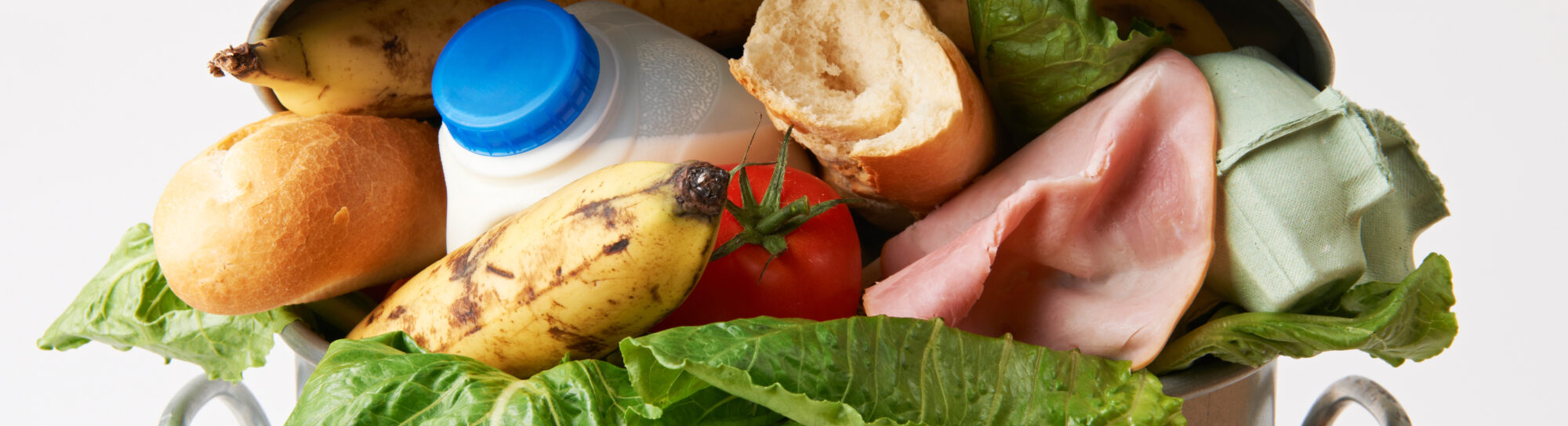
Food waste is harmful to the environment and to the wallet
In the Swiss food chain – from producers to consumers – considerable amounts of food are lost each year, which would still be perfectly suitable for consumption.
Published: 27.01.2020, 00:00 | Updated: 16.03.2022, 14:40
In brief:
- In Switzerland, more than 300 kilograms of food per capita are lost every year.
- This has enormous effects on the environment and climate.
- Avoiding food waste can also save a lot of money.
- A fact sheet provides information about the shelf life of food.
Currently, around 2.8 million tons of food are lost every year in Switzerland. This equates to about 330 kilograms of food waste per person per year. The nutritional value of the losses is approximately 1160 kcal per person per day. An ETH study commissioned by the Swiss Federal Office for the Environment shows the effects of food losses on the environment, climate and wallet.
Strong environmental impact
Food losses have an impact on the environment. Food that is thrown away or not consumed accounts for 25 percent of Switzerland's total food footprint. That is almost half the environmental impact of Switzerland's private motorized transport. It also shows: The later in the food chain a food product is lost, the greater the environmental impact. This is because energy-intensive processes such as transport, processing or cooling have already taken place. Households and catering are therefore also responsible for more than half of the environmental pollution caused by food waste.
The foods with the greatest environmental impact of food waste are breads, baked goods, cheese, whey and fresh vegetables. They are thrown away in relatively large quantities and are therefore particularly significant. Per kilogram of food waste, however, coffee, cocoa and beef represent the greatest environmental burden.
Climate and wallet also affected
Food waste is also a burden on the climate. The loss of food emits 500 kilograms of CO2 equivalents per person every year. This corresponds to about a quarter of the climate effects of the entire Swiss food system. In addition to the environmental impact, the loss of food has consequences for the wallet. Swiss households throw away CHF 600 worth of food per person each year. In total, the country loses more than CHF 5 billion through food waste.
Greatest potential for improvement in households
By halving food losses, as foreseen in the Sustainable Development Goals, the environmental impact could be reduced by 39-61 percent. The authors stress that optimized recycling of food waste has relatively little environmental benefit. The prevention of waste would have much greater effects. The authors see the greatest leverage in measures at the end of the food chain – that is, in households. There, the prevention of waste has a particularly big effect on the environment.
Fact sheet against food waste
But in many households there is uncertainty about the shelf life of food. Many are wondering: How long can products be consumed beyond the best-before date without any concern? According to "BauernZeitung“, the answer is provided by a fact sheet prepared by the working group "foodsave2025“. The group consists of representatives from science, donation organizations and the food industry. The fact sheet is intended to help avoid food waste. Many foods can be kept for much longer than you think. The best-before date is only a date up to which the manufacturer guarantees the integrity of a product. Beyond that, however, in most cases it can be kept for some time longer.
For example, flour, pasta, sugar, chocolate, tea or coffee can be consumed for a year beyond the best-before date without concern. Soft drinks, canned goods and breakfast cereals can be consumed for 120 days longer. For frozen products it is 90 days. But even raw eggs and pasteurized milk can still be enjoyed for six days past the best-before date. However, care should be taken with pastry, unpackaged meat or generally products with a consumption date (as opposed to the best-before date). If a usage date is indicated on the product, it is important to pay attention to it. In addition to the fact sheet, the working group has developed two guidelines for the dating of food as well as for the donation of food.
The avoidance of food waste was recognized by the population as an important concern. This is confirmed by a survey conducted by the Swiss Retail Federation. It is true that price is still important for consumers. But avoiding food waste has an influence on many people's shopping behavior. And as the "SonntagsZeitung" writes, the leftover bible "Leaf to Root" by Zurich-based Esther Kern also won the award for the best vegi cookbook of the last 25 years at the Gourmand World Cookbook Awards.
Sources
Related articles

A Hint to Politicians, Delivered by Test Tube
Switzerland's top science prize goes to a researcher who helped develop the "gene scissors", a technology that has decisively advanced agriculture. While science has long since opened up new possibilities and the EU is moving ahead on regulation, Switzerland continues to dawdle.

Full Shelves – Of course! How Secure Is Our Supply Really?
Security of supply sounds like a shared goal. However, as soon as it comes to the path to get there, conflicts arise: between market and state, ecology and production, as well as self-sufficiency and international connectivity. The Agricultural Policy Podcast and swiss-food.ch explore the key dependencies and areas of tension surrounding supply security in a five-part series. The highlight will be a live podcast in front of an audience on November 5, 2026, at the Äusserer Stand (Hofcafé) in Bern.
Is Organic More Sustainable?
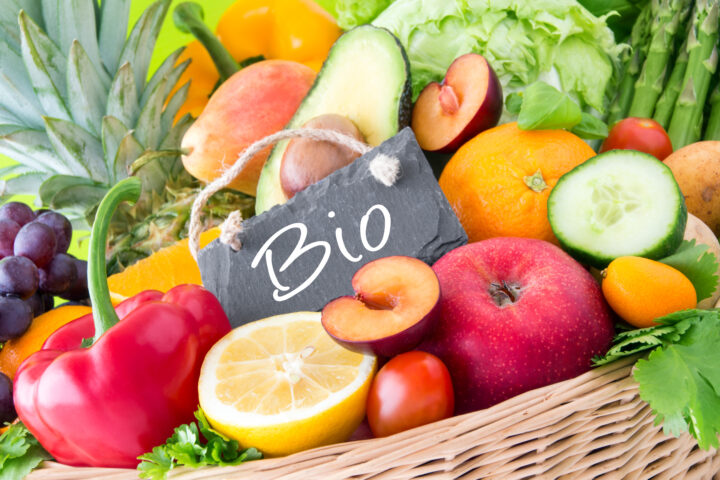
Organic food is considered a prime example of sustainability – but in reality, it often ends up in the waste bin faster than conventional products. The omission of artificial preservatives and modern plant protection drastically shortens shelf life and leads to more food waste.
"Natural is healthy, chemicals are toxic."
Everything that occurs in nature is healthy and synthetically produced substances, i.e. "chemical" substances, are toxic. This myth is fundamentally wrong: There are many highly toxic substances in nature, and at the same time there are many synthetic substances that are absolutely harmless.