

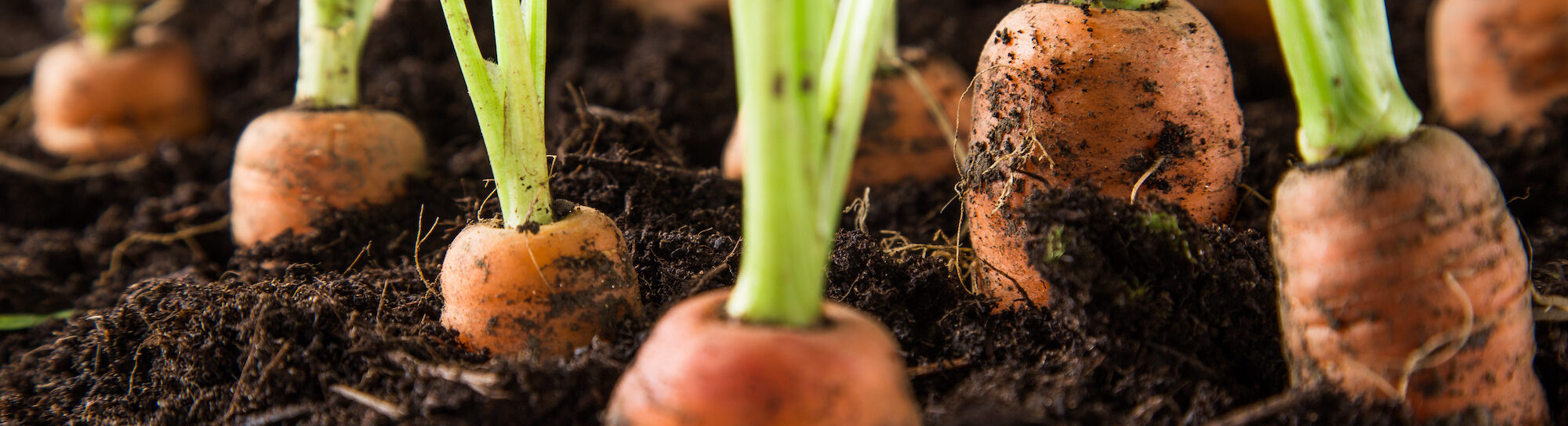
Swiss carrots and onions are in short supply
Switzerland is in danger of running out of home-grown carrots and onions by the spring. This is due to the poor weather conditions last summer. It was not possible to begin sowing storage vegetables until far too late. Stocks are running low.
Tuesday, January 18, 2022
According to the Verband der Schweizer Gemüseproduzenten, stocks of carrots, onions and celeriac are about 30 percent below the three-year average. According to an article in "Blick". The situation looks gloomier still for beets and red cabbage. For these, inventories are as much as 50 percent lower than usual levels.
Imported carrots instead of Swiss vegetables
In plain language, this means: There are not enough reserves to last until the next harvest. In an interview with "Blick", Alexander Zogg, managing director of Müller Azmoos AG, predicted: "It is expected that by mid-April there will be no Swiss carrots left". His company markets and distributes vegetables from 120 vegetable growers in eastern Switzerland. The first carrots are not expected to be ready for harvest until June this year. In the time between, these carrots will probably have to be imported – from Italy and Spain. Migros warned in "Blick" that carrots will probably have to be imported in April and May, until the new crops are harvested domestically in the summer. It is quite normal for Switzerland to import carrots for two to three weeks in May. But this year the practice will continue for one-and-a-half months. According to Zogg, the reserves of Swiss onions may be gone as early as the end of March.
Rain and hail in summer 2021
The reason for these shortages of Swiss storage vegetables is the abysmal weather that prevailed in the spring and summer of 2021. Cool temperatures, continuous rain and hail destroyed a large portion of the crops, or prevented the vegetables from being planted until much too late. Consequently, the vegetable growing season was also shorter than in normal years. According to the "Blick" report, the onion harvest was particularly badly affected. The bulbs are extremely sensitive to excess moisture and hail, and many farming concerns reported that their crops completely failed. The effects of the poor weather conditions were also felt at the annual "Zibelemärit" Onion Market in Bern. Considerably fewer onions were offered than in previous years.
Rising prices
Even so, the farmers were able to obtain good prices for the smaller harvest, which make up for the lost volume to some degree. According to the Federal Office for Agriculture (BLW), the price per kilogram for Swiss carrots in 2021 was about 30 Swiss centimes higher than in the years before. This represents to an increase of 30 percent per kilogram. At times, onions also cost 20 centimes per kilogram more than in previous years.
Sources
Related articles

Legionella, Japanese beetles, and market turbulences: What are the consequences of the dry heatwave summer 2026?
How do persistent heat and drought in the summer of 2026 impact health, agriculture, and the economy? The summer of 2026 exemplifies how heat and dry conditions are becoming a threat across various areas: from cooling systems and livestock housing to crops and consumer wallets.

Unwanted Invaders: Why Pesticides Are Essential in the Fight Against Invasive Species
They are small, highly mobile and extremely persistent: invasive species are spreading increasingly across Switzerland. Whether it is the Japanese beetle, the Asian hornet or newly discovered ant species, these unwelcome guests threaten not only native ecosystems, but also agriculture and residential areas. There is an urgent need for pesticides – including biocides and plant protection products – to combat these pests effectively.

What can the CRISPR gene scissors do – and what not (yet)?
Since 2012, CRISPR/Cas has made it possible to alter plant DNA precisely, purposefully, and relatively cheaply. Applications ready for use today primarily include disease resistance, improved quality such as taste and nutritional value, and accelerated breeding. In contrast, complex traits like drought tolerance remain difficult because many genes are involved.

Cheap Spanish Tomatoes Are a Thing of the Past – Now Innovation Is Needed
Fewer and fewer crop protection products, increasing pest pressure and retailers demanding low prices: Spain’s vegetable production is caught in a dilemma that also affects Switzerland. The only way out is through plant breeding and digitalisation.