


«How can our agriculture and food system become fit for the new normal?»
It is time to say goodbye to millimeter agricultural policy, says Liebegg director Hansruedi Häfliger in view of the global multi-crisis. Farming families should be given back the necessary room for maneuver so that the agriculture and food economy becomes more resilient.
Published: 11.04.2023, 17:14
The beginning of the year is an appropriate time to look back and take stock: the world is in a multi-crisis! A brutal war of aggression rages in Europe, and the global geopolitical situation is more unstable than ever. War also rages in cyberspace and even in outer space. Climate and hunger crises contribute to massive migration flows, and the energy crisis, along with the effects of COVID-19, cause insecure and disrupted supply chains. Financial and commodity markets react with corresponding instability, fueling inflationary tendencies. Additionally, global land grabbing and brain drain occur alongside unprecedented labor shortages in Western Europe.
Crises require adaptive systems
The world has entered a "new normal" that will affect us for decades to come. The volatile, uncertain, complex, and ambiguous world increasingly overwhelms people, leading to a sense of loss of control. In an attempt to regain control, people ask for more planning, increasing the need for structure, order, and compliance. However, scientific research shows that routines, checklists, and standardized procedures are of limited use in turbulent times. Broad competencies and personal responsibility are essential. Crises call for resilient individuals with perseverance and trustworthy minds with leadership skills. Crises require adaptive systems that provide room for maneuver for the actors.
Balancing conflicting goals is crucial
Currently, the Swiss economy remains in a robust position. Ample room for maneuver and intensive "training" with trading partners have kept the actors fit. However, the multi-crisis will increasingly put pressure on today's prosperity, and basic human needs will become more important at the same time. Thus, we would do well to make our agriculture and food sector more resilient by giving farming families the room for maneuver they need and moving away from overly restrictive agricultural policies. We should also increasingly weigh the prosperity-driven trade-offs in the environmental and rural sectors according to the principle of systemic relevance. It is not yet too late to prepare ourselves for the new normal.

Hansruedi Häfliger is Director of the Liebegg Agricultural Center. This guest article was first published in the "BauernZeitung" of February 17, 2023.
Kindly note:
We, a non-native editorial team value clear and faultless communication. At times we have to prioritize speed over perfection, utilizing tools, that are still learning.
We are deepL sorry for any observed stylistic or spelling errors.
Related articles
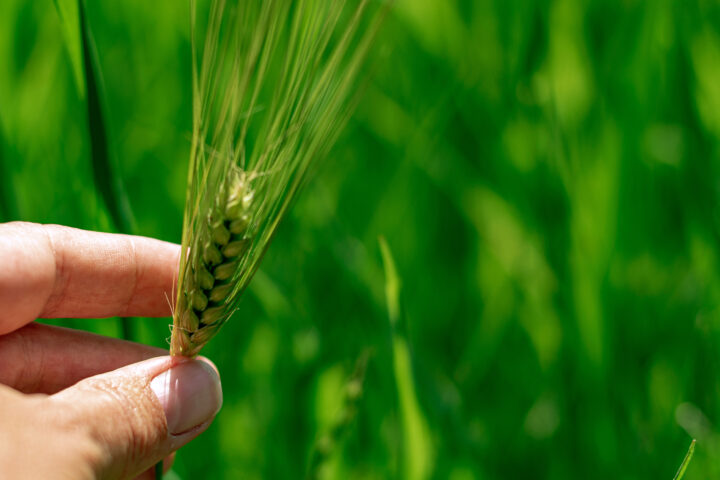
A Contribution Spanning Generations
Food security begins long before the harvest. It begins with varieties that deliver yields, resist diseases and perform reliably under changing environmental conditions.
A Hint to Politicians, Delivered by Test Tube
Switzerland's top science prize goes to a researcher who helped develop the "gene scissors", a technology that has decisively advanced agriculture. While science has long since opened up new possibilities and the EU is moving ahead on regulation, Switzerland continues to dawdle.

Full Shelves – Of course! How Secure Is Our Supply Really?
Security of supply sounds like a shared goal. However, as soon as it comes to the path to get there, conflicts arise: between market and state, ecology and production, as well as self-sufficiency and international connectivity. The Agricultural Policy Podcast and swiss-food.ch explore the key dependencies and areas of tension surrounding supply security in a five-part series. The highlight will be a live podcast in front of an audience on November 5, 2026, at the Äusserer Stand (Hofcafé) in Bern.
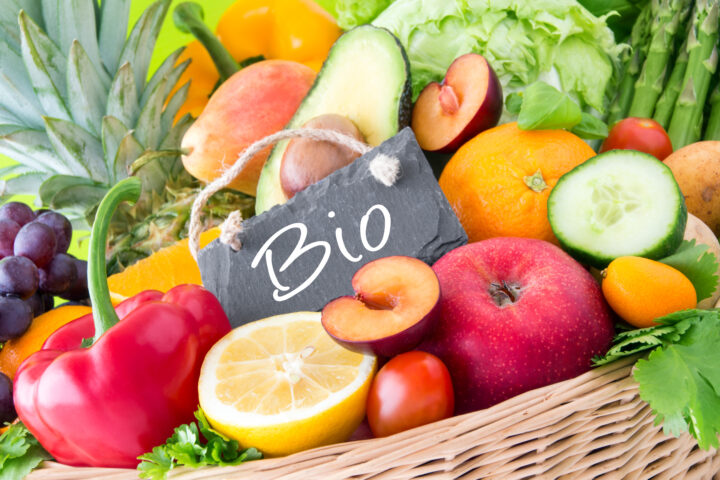
Is Organic More Sustainable?
Organic food is considered a prime example of sustainability – but in reality, it often ends up in the waste bin faster than conventional products. The omission of artificial preservatives and modern plant protection drastically shortens shelf life and leads to more food waste.